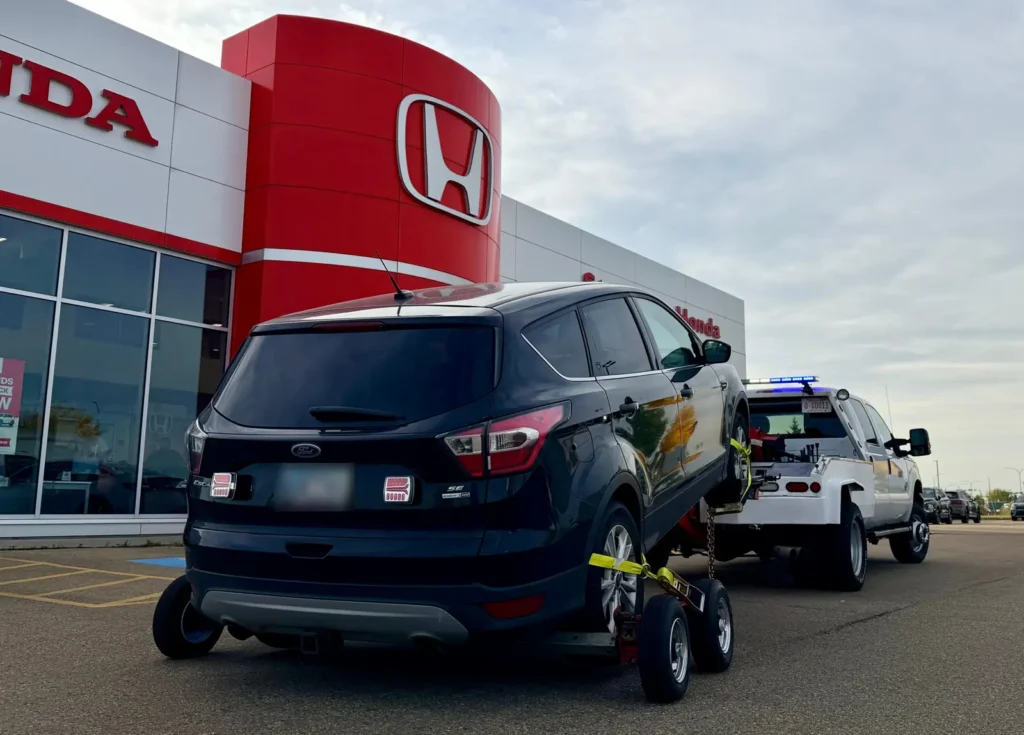
Why AWD and 4WD vehicles need special care
AWD towing done wrong can lead to an expensive drivetrain repair. On most all-wheel-drive and four-wheel-drive vehicles, the front and rear wheels are linked through the drivetrain. Towing with two wheels on the road forces those parts to turn, which can damage the transfer case or differentials, and that repair can cost far more than the tow. Many owner’s manuals say these vehicles must be moved with all four wheels off the ground.
How we handle AWD towing and 4WD towing
Our self-loader carries a set of dollies on every call. We lift one axle with the wheel lift and place the other wheels on dollies, so nothing in the drivetrain turns while your vehicle is moving. It’s the same result you’d get on a flatbed, from a truck that can also reach tight driveways and parking lots.
Vehicles we move this way
- AWD cars, crossovers and SUVs, like Subaru, Audi quattro, BMW xDrive and Toyota RAV4 AWD
- 4WD pickups and SUVs
- Vehicles that won’t shift out of park
- Vehicles with locked steering or seized wheels
Tell us the make and model
When you call, give dispatch the year, make and model. We’ll confirm the right setup before we dispatch, and include dollies in the written estimate so the price doesn’t change on arrival.
Licensed, insured and priced in writing
Ironline is licensed and fully insured, including on-hook coverage for the vehicle we’re towing. As required by Alberta’s Vehicle Towing and Storage Regulation, you get a written estimate before the tow begins and an itemized invoice after.
Frequently asked questions
Can an AWD car be towed with two wheels down?
Usually not without risk to the drivetrain. Check your owner’s manual. We tow AWD vehicles with all four wheels off the road.
Is dolly towing as safe as a flatbed?
For drivetrain protection, yes. Both keep all four wheels off the road.
Does dolly use cost extra?
Dollies are included in the written estimate you get before the tow, so you know the total up front.